REVIEW · BUENOS AIRES
Buenos Aires: Hop-On Hop-Off City Bus Tour
Book on GetYourGuide →Operated by Gray Line Argentina · Bookable on GetYourGuide
Buenos Aires in one long loop of clues. This hop-on hop-off bus turns the city into a choose-your-own-adventure, with an open-top double-decker ride plus a multilingual audio guide that keeps you oriented. I love how the route strings together classic areas like La Boca and San Telmo vibes with modern zones like Palermo and Belgrano, and I also like the frequent running that makes it easy to plan your own stops. One catch: a full loop can take a few hours, so if you doze through it like a moving billboard, you may only get off once for lunch.
You can start at Diagonal Norte (Av. Pres. Roque Sáenz Peña 728) or Plaza San Martín (Av. Santa Fe 808). The buses run Monday to Sunday, 9:30 a.m. to 6:00 p.m., with circulation starting a bit earlier from those two areas. Plan around the last buses leaving at 5:30 p.m., since they only go partway back on the route.
In This Review
- Key things to know before you get on
- How a hop-on hop-off bus helps you see Buenos Aires fast
- Price and value of a $35 ticket for 24–72 hours
- Where to start: Diagonal Norte vs Plaza San Martín
- Operating hours and how the last buses change your plan
- Onboard experience: open-top decks, WiFi, and the audio rhythm
- The route: stop-by-stop highlights from Congress to Teatro Colón
- Starting area and downtown monuments
- La Boca and the riverfront mood
- Where routes connect and how to switch plans
- Art, views, and culture stops
- Big city edges and memory places
- Football stadium zone and museum access
- Recoleta and the classics you can’t miss
- A note on covering everything in one go
- Planning for 24 vs 48 vs 72 hours without feeling rushed
- Match-day and stadium timing: the one thing to check
- What could frustrate you (and how to fix it)
- Should you book this Buenos Aires hop-on hop-off bus?
- FAQ
- How long are the hop-on hop-off ticket options?
- Where are the main starting points for the tour?
- What time does the bus operate?
- How often do the buses run?
- Is WiFi available during the tour?
- What languages are included in the audio guide?
- Does the ticket include admission to attractions?
Key things to know before you get on
- 24, 48, or 72 hours to ride: your ticket time starts the first time you board.
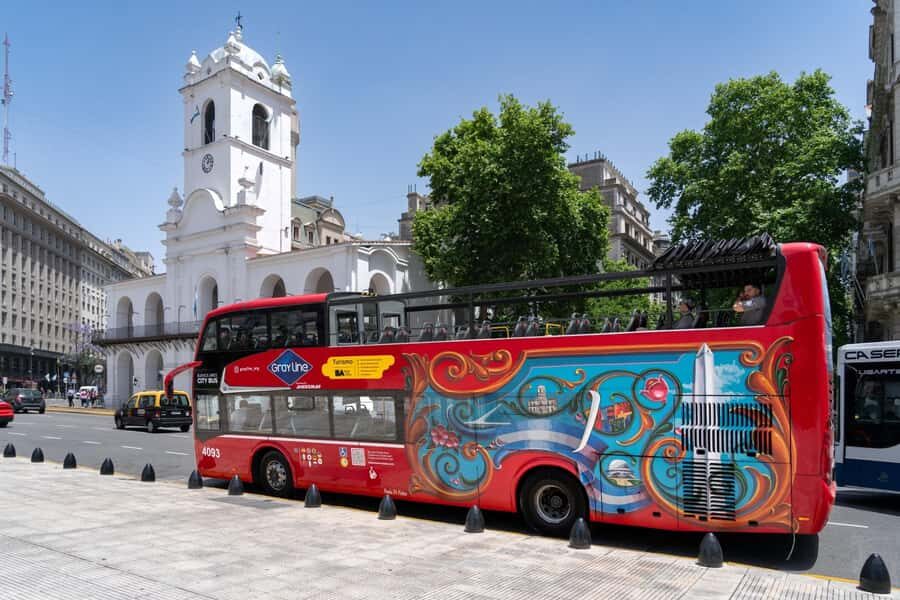
- Frequent departures: buses run about every 25 minutes during the day, but waits can stretch if traffic piles up.
- Audio guide in many languages: Spanish, English, Portuguese plus a long list including Japanese, Chinese, Russian, Italian, French, German, Ukrainian, and Korean.
- Air-conditioned open-top comfort: double-decker buses with sunroof, a big deal in Buenos Aires weather.
- Free WiFi onboard and at stops: it’s included, but you should still keep offline options ready.
- Match-day caveat for stadium areas: on days when River or Boca play, tours won’t run.
How a hop-on hop-off bus helps you see Buenos Aires fast
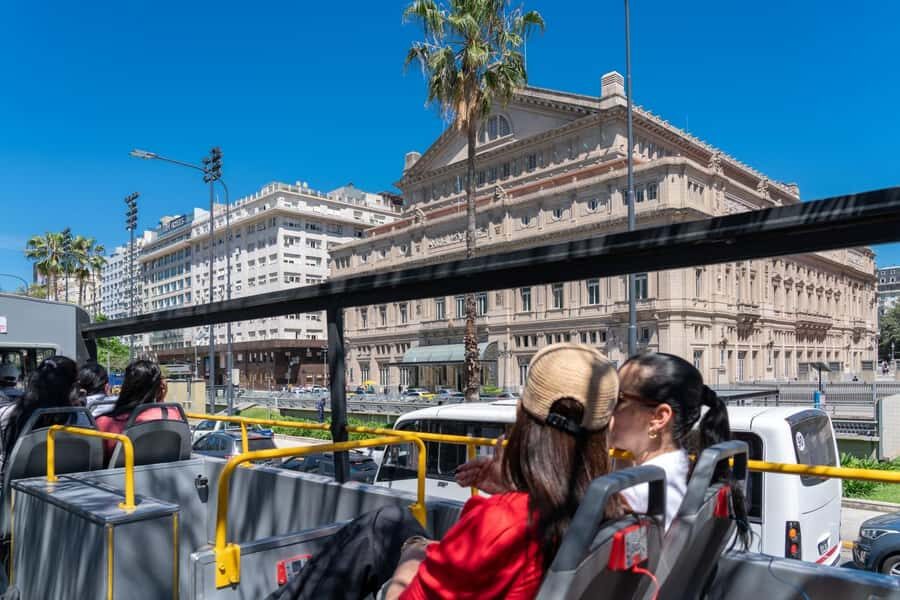
Buenos Aires is huge, and the neighborhoods feel like they were built on different planets. This bus helps because it gives you a moving backbone through areas you’d otherwise stitch together with taxis and careful timing. You’re not locked into one walking route; you can ride the full circuit or hop off to match the day to your energy.
The included audio guide matters more than you’d think. If you’re the kind of traveler who likes context while looking at facades and street scenes, this keeps you from feeling like you’re just reading guidebooks through a window. If you’re more of a photo-and-stroll person, the narration still helps because it tells you what you’re actually looking at as the bus rolls past major landmarks.
Other Buenos Aires tours we've reviewed in Buenos Aires



Price and value of a $35 ticket for 24–72 hours
At $35 per person, the ticket price is more reasonable than it looks if you use the flexibility. The cost isn’t just the ride; it’s also the time window (24, 48, or 72 hours), the air-conditioned open-top double-decker, and the audio guide built in. With hop-on hop-off, you’re effectively paying to buy yourself fewer decisions: you can plan days around “get on the bus when you’re done” instead of coordinating transport every time.
Value also depends on how you ride. One smart way to use it is to treat the first ride as a “map with viewpoints.” Then you use your second day (or later hours) to get off near the places you want to study closer. If you’re short on time, a 48-hour ticket is often the sweet spot for spreading your visits across multiple neighborhoods without rushing.
Where to start: Diagonal Norte vs Plaza San Martín
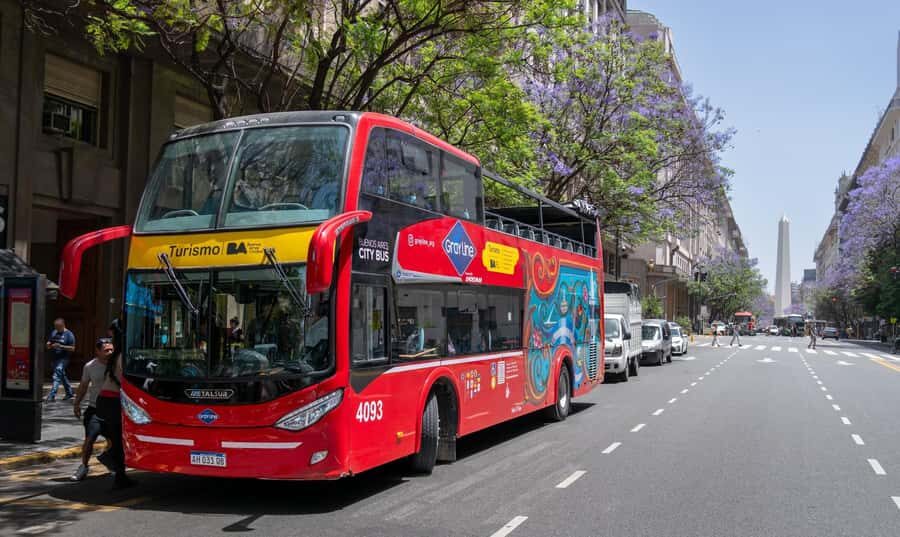
You can start from either of the two main pickup zones: Diagonal Norte at Av. Pres. Roque Sáenz Peña 728, or Plaza San Martín at Av. Santa Fe 808 (the office stop). Starting matters because Buenos Aires traffic can be a game of patience, and it’s easier to begin near where you’ll naturally return to at the end of the day.
There’s also a useful detail for specific spots: El Gato Negro’s nearest bus stop is stop 1 (Congreso). If your plan includes that area, starting nearby can save you a chunk of back-and-forth.
Operating hours and how the last buses change your plan
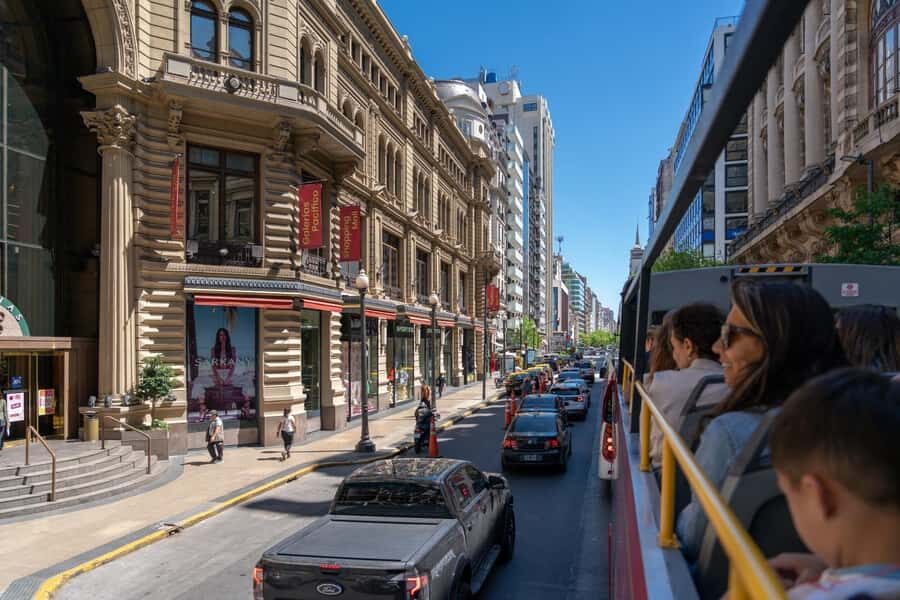
The bus runs Monday through Sunday from 9:30 a.m. to 6:00 p.m. Circulation begins around 9:20 a.m. from the two main starts. During the day, expect departures about every 25 minutes, which is frequent enough to keep a casual schedule.
The key timing point is the end of service: the last buses leave at around 5:30 p.m., and they only make a half return along the route. Translation: don’t assume you can hop on late and still finish the full circuit. If you want the big “wow, I saw it all” loop, aim for an earlier window.
Onboard experience: open-top decks, WiFi, and the audio rhythm
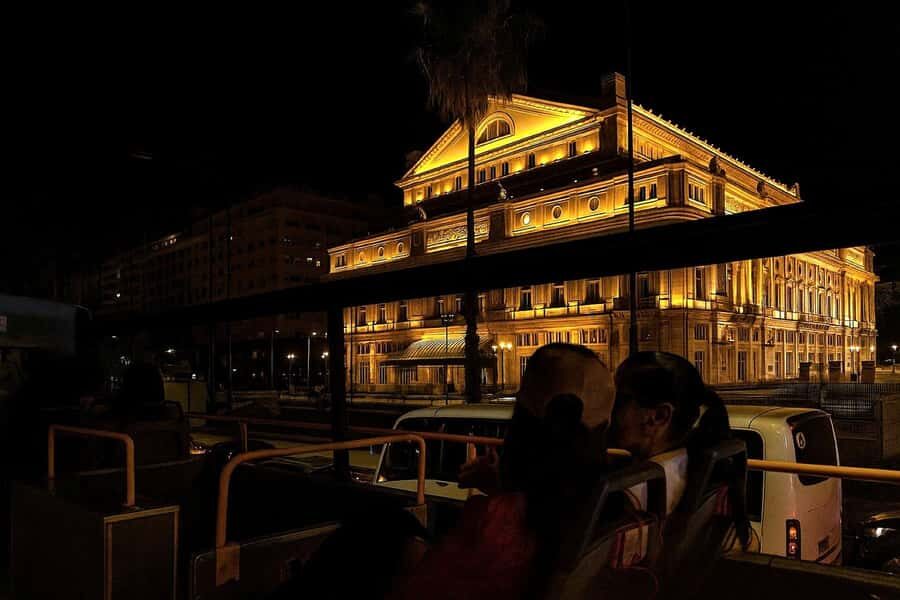
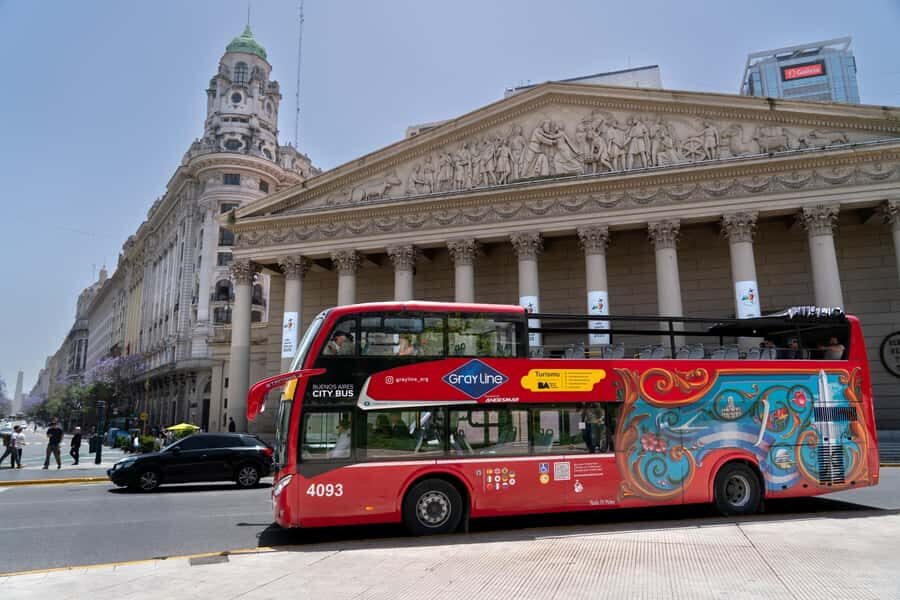
This is an open-top double-decker style bus with air conditioning and a sunroof, so you can switch between fresh-air views and comfortable indoor temperatures. On good days, that upper deck is exactly where you want to be for landmark spotting—especially as the bus transitions between older districts and newer skyline areas.
Free WiFi is offered onboard and at bus stops. Still, I’d treat it as a bonus, not a guarantee. Have a plan for offline use: save your map stops and any restaurant or museum ideas ahead of time.
Audio performance is the deciding factor for these tours. The audio guide includes many languages, and you also get onboard announcements/live tour guide language support in Spanish, English, and Portuguese. The practical tip: if you’re in a noisy spot upstairs, keep the volume up and expect occasional overlap between announcements and the running commentary.
One small comfort detail: some seat-mounted headsets/ear pieces can feel short for certain listeners. Bringing your own earbuds is an easy way to solve that.
Other hop-on hop-off tours we've reviewed in Buenos Aires

The route: stop-by-stop highlights from Congress to Teatro Colón
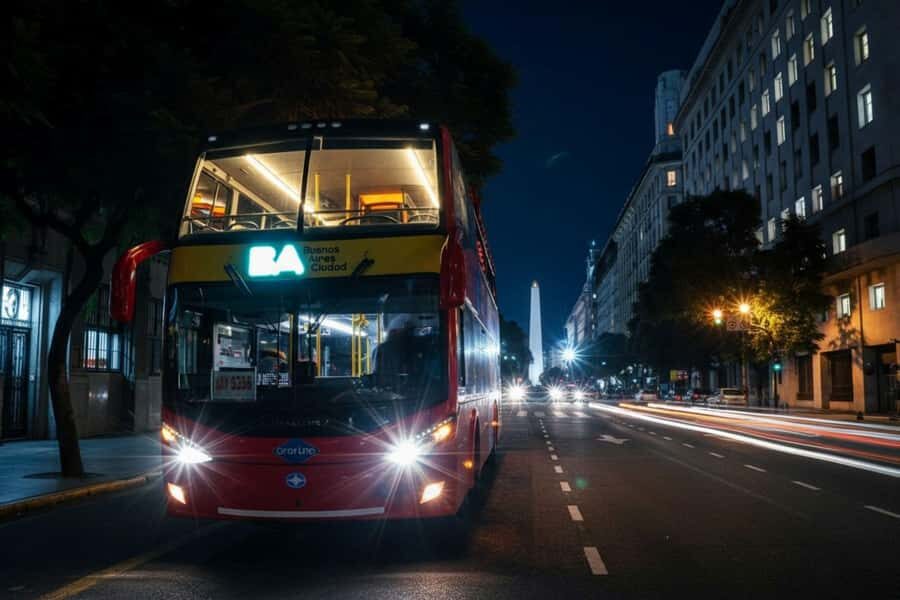
You can hop on and off at the stops on the route, and many of the big-name sights show up as the bus rolls through. Here’s how to think about the stops, and how to decide where you should actually get off.
Starting area and downtown monuments
Start near Diagonal Norte / Congreso (Stop 0 / Stop 1 area)
This is where you begin if you want quick access to the downtown flow. It’s a good first boarding point because it sets you up to ride east and south without wasting time crossing town.
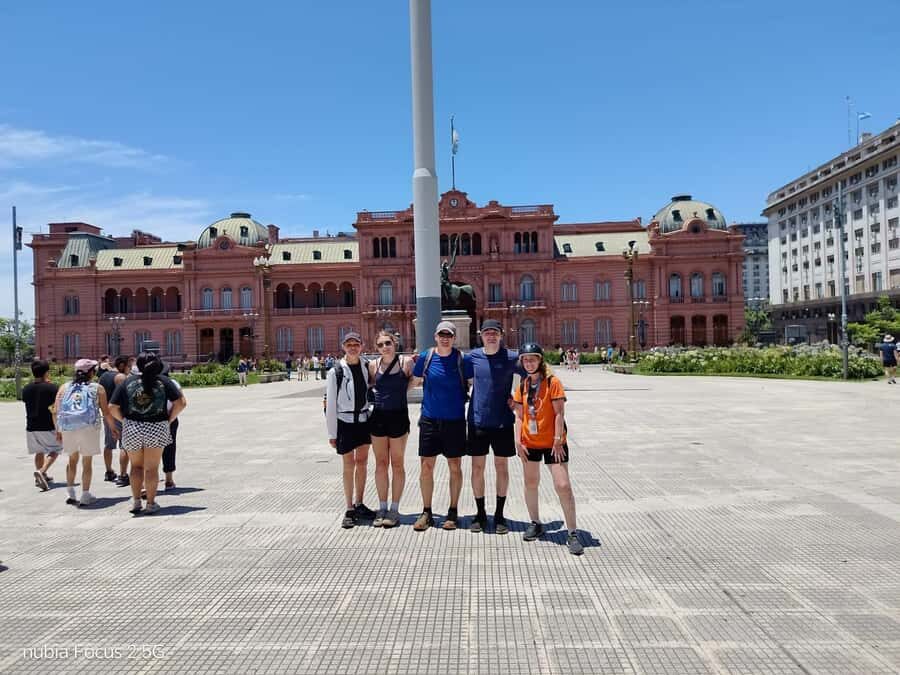
Palace of the Argentine National Congress (Stop 2)
You’ll see it as the bus moves through the central corridor. Best use: stay on board for the skyline moment unless you specifically want to get off and photograph right next to the building.
El Loco Chávez – Paseo de la Historieta (Stop 3)
This is the kind of stop that rewards you for hopping off only if you care about street-level culture. If you’re on a tight schedule, let it pass and focus on the bigger neighborhood anchors later.
La Boca and the riverfront mood
Plaza Dorrego (Stop 4)
A classic stop for the La Boca atmosphere. If you want the market-energy feel of the area, this is a strong “hop off and stroll” candidate.
Usina del Arte (Stop 5)
A modern-ish cultural stop in the same general pocket as La Boca. If you’re into venues and architecture, get off here for a shorter wander; if not, treat it as a quick view stop.
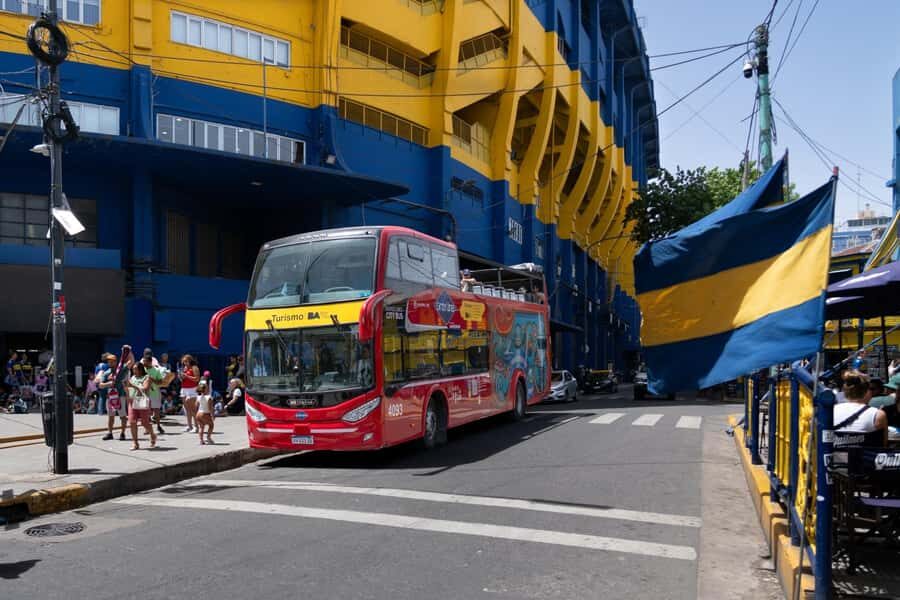
La Bombonera (Stop 6)
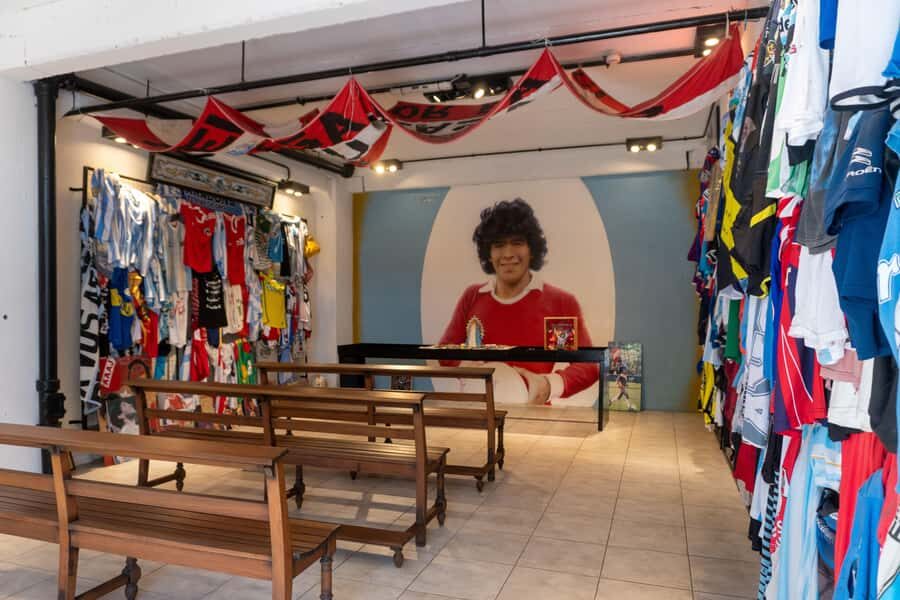
This is one of Buenos Aires’ most iconic sports backdrops. If you’re a football fan, the area is a natural reason to spend time here; and importantly, the Boca Museum is accessible from stop 5 (Bombonera).
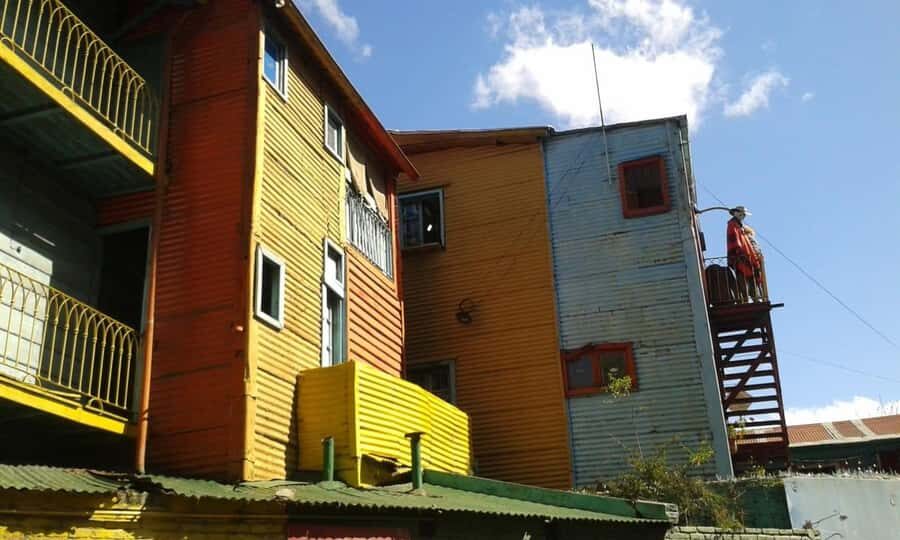
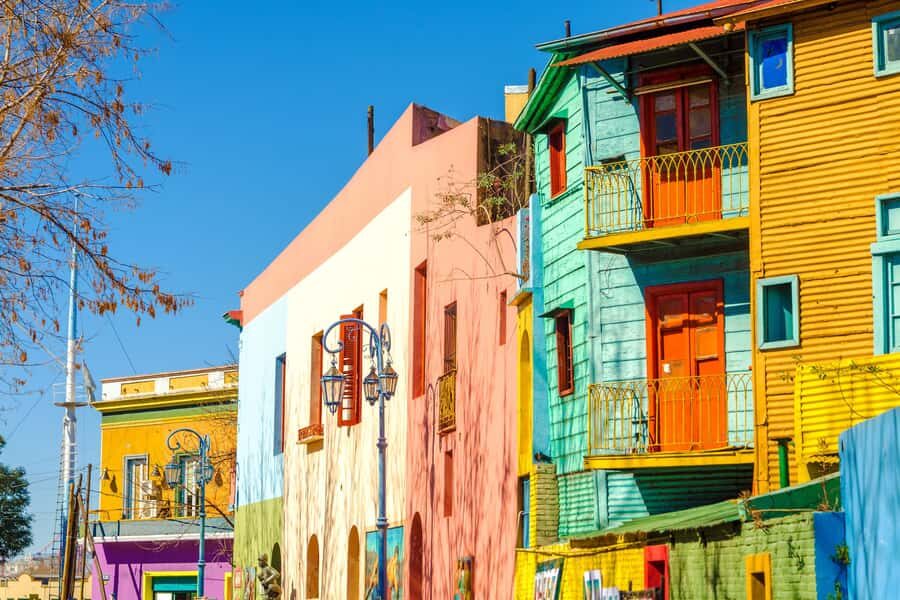
Caminito (Stop 7)
Caminito is where the neighborhood’s color and character show up in your photos fast. You’ll enjoy it most if you hop off and walk instead of just filming from the top deck.
Costanera Sur (Stop 8)
This is your shift toward the waterfront. It’s a good break in the route if you want a calmer scenery moment and a wider look at the city edges.
Puerto Madero (Stop 9)
Puerto Madero feels newer and more polished, like a different Buenos Aires. If you only have time for one “modern” stop, this is usually the one people want, because it’s easy to orient and photograph.
Where routes connect and how to switch plans
Bus Turístico / Circuito Rojo y Amarillo / Estación Fluvial (Stop 10)
This is a practical junction point in the system. If you’re trying to cover more ground with less backtracking, this is the kind of stop where you can fine-tune which side of the city you’ll focus on next.
Galerías Pacífico (Stop 11)
A shopping-arcade style landmark that’s worth a quick look if you like indoor architecture. Even if you don’t shop, it’s the kind of place that makes you pause for photos.
Plaza General San Martín (Stop 12)
This is the other main start zone and office stop, so it works as your “base return” point. In planning terms, it’s useful because it sits near a cluster of sights.
Art, views, and culture stops
Floralis Genérica (Stop 13)
This is the famous metal flower sculpture area. It’s one of those sights that’s fun to see from the bus, but it’s even better when you can stand near it and take your time.
Museum of Latin American Art of Buenos Aires (Stop 14)
Even if you don’t go inside, the museum presence tells you you’re entering the arts side of the city. If you want a museum day, this stop is a strong pivot point.
Planetario Galileo Galilei (Stop 15)
A science/cosmos themed stop. It’s a good choice for families and also for adults who just like a change of pace from historical streets.
Club de Pescadores (Stop 16)
A “local place” style stop. If you want a softer look at Buenos Aires beyond monuments, this is a decent one to check on foot.
Big city edges and memory places
Jorge Newbery Airfield (Stop 17)
The bus passes by the airfield area. It’s not always the most sightseeing-heavy stop, but it gives you a sense of where the city connects outward.
Parque de la Memoria de Buenos Aires (Stop 18)
This is a memorial park stop that adds weight to the route. It’s worth getting off for a walk if you want the more reflective side of Buenos Aires.
Football stadium zone and museum access
Estadio Monumental Antonio Vespucio Liberti (Stop 19)
A major landmark in the River Plate stadium world. The River Museum is accessible from stop 19 (Monumental). One practical note: if River or Boca have matches, the stadium-area touring won’t run, so keep an eye on your dates.
Chinatown, Buenos Aires (Stop 20)
This is a smart stop if you want a food plan after riding. You can also hop off here for an evening vibe without needing an extra transit step.
Argentine Polo Association (Stop 21)
A niche stop if you’re curious about Argentina’s polo culture. If that’s not your thing, enjoy the view and save your hop-off time for the neighborhoods that match your interests better.
Carta Magna Monument (Stop 22)
A monument stop that gives you a specific piece of the city’s civic story. It works well as a quick photo stop.
Recoleta and the classics you can’t miss
Recoleta (Stop 23)
Recoleta is the neighborhood you go to when you want elegant streets and big-name landmarks nearby. Plan on hopping off and walking a bit here rather than treating it like a “pass and move” stop.
Teatro Colón (Stop 24)
Teatro Colón is a top-tier Buenos Aires icon. Even if you don’t book an interior visit, you’ll want time for exterior views and the nearby street scene.
A note on covering everything in one go
Some versions of the bus loop focus on different stops. For example, one circuit (yellow) includes a stop for Buenos Aires Cemetery, while another (red) does not. If that cemetery matters to your list, make sure you’re on the right loop for it.
Planning for 24 vs 48 vs 72 hours without feeling rushed
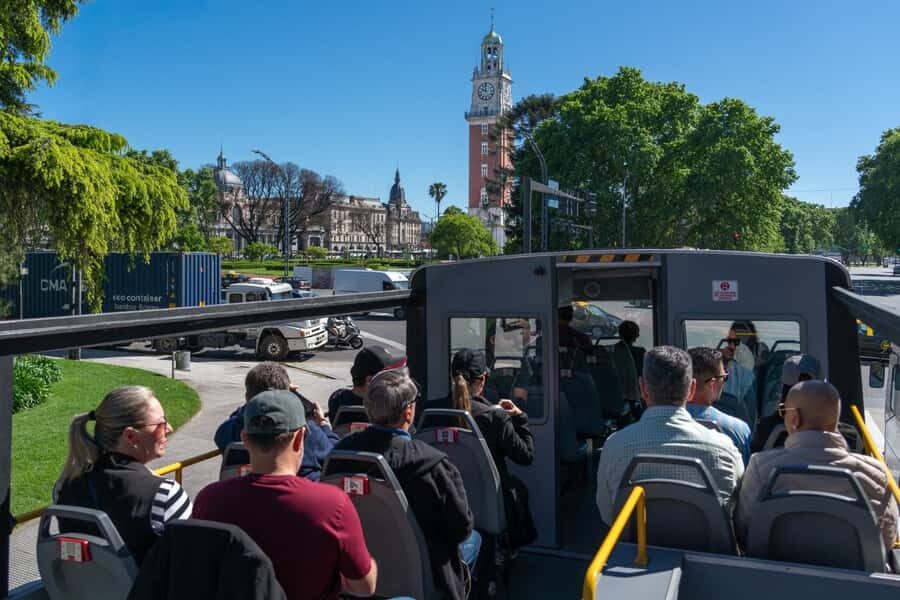
Here’s a practical way to use the different ticket durations.
For 24 hours, think “orientation and two neighborhoods.” Ride early to get a feel for the route, then pick two areas to get off for real time—places like La Boca for walking (Caminito and Plaza Dorrego) and Recoleta for a longer stroll.
For 48 hours, do the full loop once, then come back. One useful detail: the full route on the red bus can take around 3 hours. That’s great for a first pass, but it also means lunch planning matters. After your loop, use your second round to hop off at the spots that caught your attention most.
For 72 hours, you can get picky. This is when you add a museum visit, a slower waterfront walk, and one extra neighborhood repeat. It also gives you a cushion if a bus is delayed by traffic or you decide to linger where you’re standing.
Match-day and stadium timing: the one thing to check
If your travel dates line up with River or Boca matches, you need to know that tours won’t run on those days when the stadium areas are active. That doesn’t mean you can’t see football culture in Buenos Aires, but it does mean your bus plan needs backup.
A smart approach is to treat the stadium stops as a bonus rather than a guaranteed highlight. If the match-day situation blocks the usual touring, you can pivot to museums and neighborhood walking closer to your next bus stop.
What could frustrate you (and how to fix it)
No tour runs perfectly, and this one has a few predictable quirks.
WiFi can fail
Free WiFi is included, but it’s not something you should rely on as your only plan. If you depend on it for navigation, keep offline maps ready.
Headset comfort varies
Some headsets and ear pieces can feel like they don’t fit great. Bring your own earbuds so you’re not wrestling with short pieces.
Timing of commentary can be a bit off
At times, the narration may describe a place after the bus has already passed it. Your fix is simple: if you care about a stop, hop off or get ready to move at the next opportunity.
Buses can run late when traffic hits
The schedule aims for about every 25 minutes, but waits can stretch to around 35 minutes in some moments. Don’t build an ultra-tight itinerary; keep buffers.
Finding specific stops can be slightly tricky
One practical complaint was that the real-time map could be easier to use. If you can, take a screenshot of your nearest stop and the direction you want before you get on.
Should you book this Buenos Aires hop-on hop-off bus?
Book it if you want a low-effort way to see a lot of Buenos Aires neighborhoods and landmarks, especially if it’s your first time. The mix of open-top views, frequent service, and the included multilingual audio guide is exactly what makes this kind of tour useful: it helps you travel smarter, not harder.
Skip or rethink it if you hate long rides with limited getting-off time, if you assume the WiFi will always work, or if you want a stop-by-stop museum day without any “moving between places” time. Also double-check your dates if your itinerary depends on the River or Boca stadium areas.
If your goal is to get your bearings fast and then choose where to spend your energy, this bus is a solid way to do it.
FAQ
How long are the hop-on hop-off ticket options?
You can choose a 24-, 48-, or 72-hour ticket. The time begins when you first board the bus on your initial reserved day.
Where are the main starting points for the tour?
You can start at any bus stop. Two main options are Diagonal Norte (Av. Pres. Roque Sáenz Peña 728) and Plaza San Martín (Av. Santa Fe 808).
What time does the bus operate?
The bus operates Monday to Sunday from 9:30 a.m. to 6:00 p.m. Buses begin circulating at about 9:20 a.m. from the main start points.
How often do the buses run?
During the day, buses run every 25 minutes. In practice, traffic can affect timing and lead to longer waits.
Is WiFi available during the tour?
Yes. WiFi is offered for free onboard the bus and also at the bus stops.
What languages are included in the audio guide?
The audio guide is available in Spanish, English, Portuguese, Japanese, Chinese, Russian, Italian, French, German, Ukrainian, and Korean.
Does the ticket include admission to attractions?
No. The ticket covers the hop-on hop-off bus ride and the audio guide, but admission to attractions and food and beverages are not included.