REVIEW · BUENOS AIRES
Buenos Aires: Montserrat, San Telmo, La Boca, and Puerto …
Book on GetYourGuide →Operated by VIP TOURS BA · Bookable on GetYourGuide
Montserrat to Puente de la Mujer is a quick hit of the real Buenos Aires. I like the way this route mixes big-city icons with small, specific details like the oldest bookstore, church, and pharmacy, plus the tiny surprises along Calle Defensa. I also like that you end with Puerto Madero’s modern skyline and Puente de la Mujer by Santiago Calatrava. One heads-up: it’s a walking tour, so you’ll want good shoes and you may feel the pace if you’re not used to city walking.
Live guiding is part of the point, and Alejandra comes up as a standout for clear, friendly storytelling, with Sebastian mentioned for smooth support. You’ll get English, Spanish, or Portuguese, and the whole thing runs about 4 hours for around $100 per person. If you’re expecting a sit-down museum day, this is not that. It’s street-level Buenos Aires, stitched together with smart context and photo stops.
In This Review
- Key things I’d mark on your mental map
- Starting at Catedral Metropolitana and Reading Plaza de Mayo
- Montserrat’s Avenue of Power: Avenida de Mayo and Café Tortoni
- Calle Defensa in Montserrat: the Oldest Bookstore, Church, and Pharmacy
- San Telmo: Mafalda, Legends, and the 1897 Market
- La Boca: Caminito, Tango Roots, and Boca Juniors Culture
- Costanera Sur Ecological Reserve: a Break Near the Center
- Puerto Madero and Puente de la Mujer by Santiago Calatrava
- How good value feels at $100 for 4 hours
- Who should book this Buenos Aires route (and who might not)
- Should you book this Buenos Aires tour?
- FAQ
- How long is the Buenos Aires tour?
- What neighborhoods and areas does the tour cover?
- Where does the tour start?
- What languages are the live guides available in?
- Is Café Tortoni included?
- Are meals or drinks included?
- Is the tour wheelchair accessible?
Key things I’d mark on your mental map
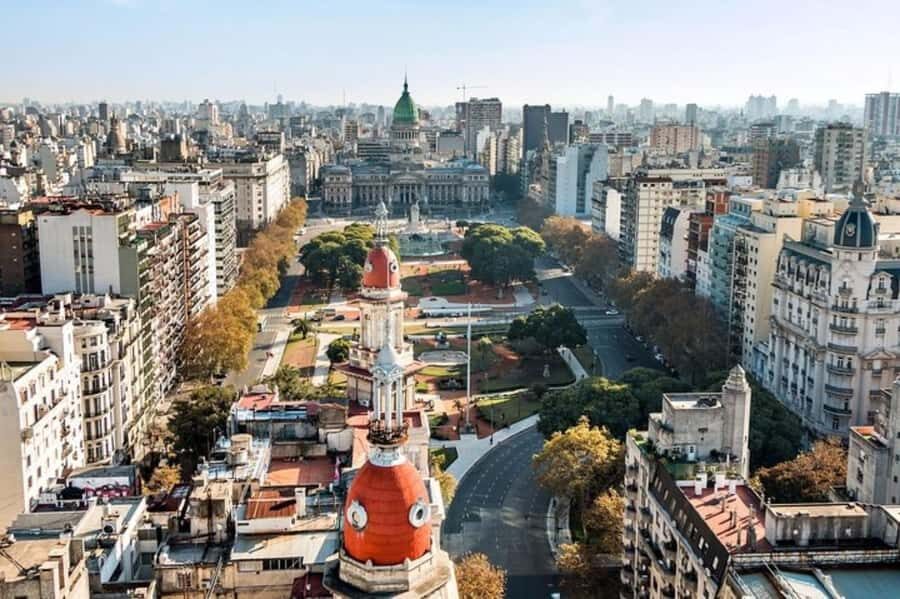
- Montserrat’s Plaza de Mayo core: where Casa Rosada, the Cabildo, and government buildings set the tone for the city
- Avenida de Mayo’s Café Tortoni stop: the city’s classic coffee-house mood, if it’s available
- San Telmo’s Calle Defensa storytelling: Mafalda’s statue, the smallest house, and legends about sailors and immigrants
- San Telmo Market (1897): antiques, stalls, and an easy place to grab a bite nearby
- La Boca’s Caminito + Boca Juniors Stadium: football culture next to tango-first neighborhood color
- Puerto Madero’s Puente de la Mujer: Calatrava’s bridge and port relics like the frigate Sarmiento and corvette Uruguay
Starting at Catedral Metropolitana and Reading Plaza de Mayo
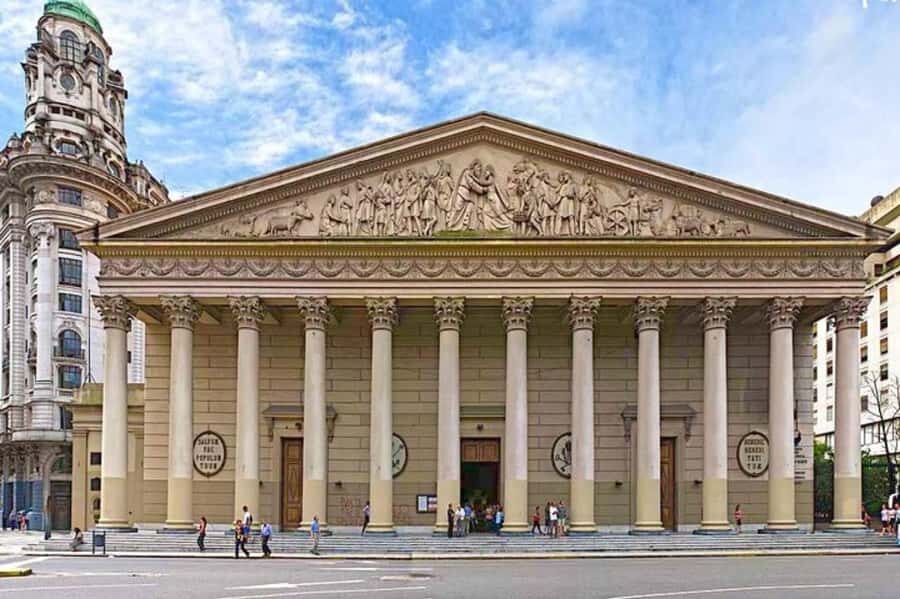
Your day kicks off at Catedral Metropolitana de Buenos Aires, which is a good way to start because it puts you right at the center of the city’s older layers. From here, you’re set up to understand what Buenos Aires looked like when power, religion, and daily life shared the same blocks.
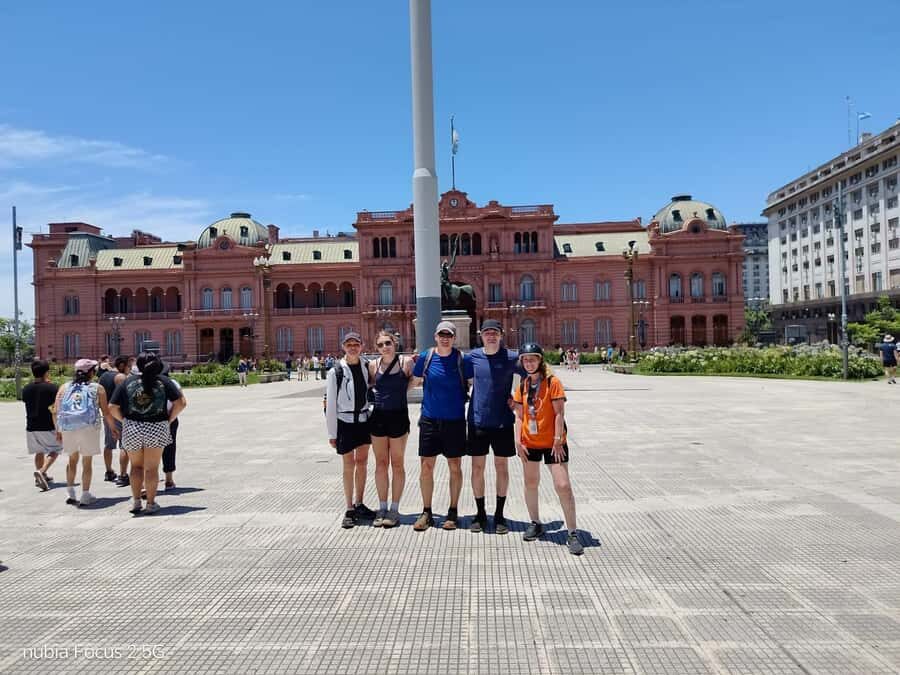
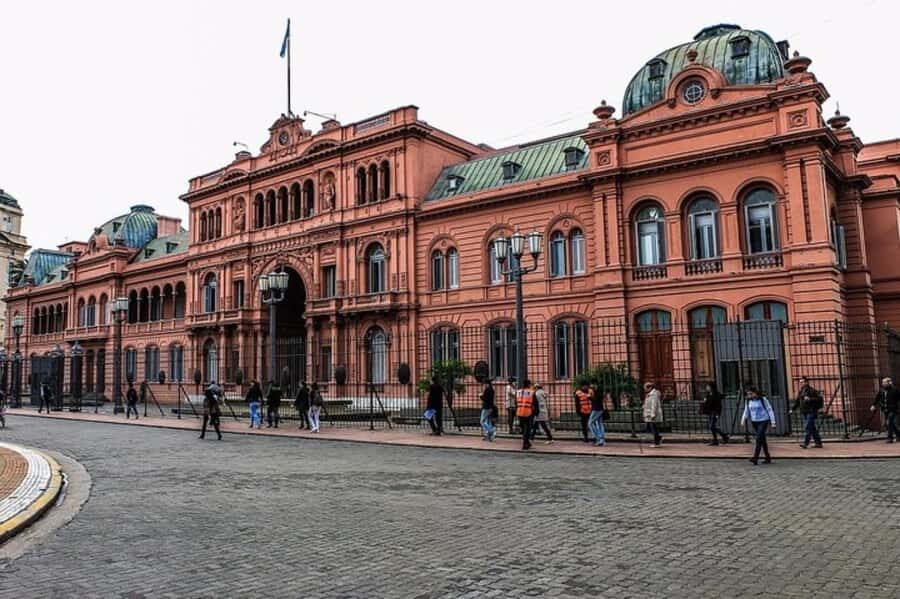
The heart of the tour is Plaza de Mayo, the city’s oldest pulsating focal point. You’ll stand in the square while the guide points out the big landmarks around it: Casa Rosada, the Cabildo, the Metropolitan Cathedral, and government ministries. This matters because Plaza de Mayo isn’t just pretty architecture. It’s where public life and politics have long intersected, and the buildings help you see that history without needing a single ticket.
A practical tip: spend a minute looking at the corners of the square, not only the center. Buenos Aires architecture often teaches you direction. Once you understand where the main boulevards lead, the city starts making sense fast.
Other Buenos Aires tours we've reviewed in Buenos Aires


Montserrat’s Avenue of Power: Avenida de Mayo and Café Tortoni
After Plaza de Mayo, you head toward Avenida de Mayo, which the guide frames as the first boulevard in the city and the first avenue in South America. That’s a big claim, but you’ll feel it when you walk: it has the feel of a planned grand corridor, the kind of space that invites big buildings and big institutions.
Along the way, there’s a stop tied to comfort and tradition: Café Tortoni, described as the oldest café in Argentina and South America. Here’s how to think about it. Even if you’re not the coffee-foam type, an old café like this is a living artifact. You’re seeing a social ritual that has lasted.
One consideration: the Café Tortoni visit is subject to availability. So come with the right mindset. If it’s open, great. If not, you can still appreciate why the guide is flagging it. The value is in understanding where the city’s famous meeting points are, not forcing a perfect stamp.
Calle Defensa in Montserrat: the Oldest Bookstore, Church, and Pharmacy
This part is for people who love specificity. Montserrat’s charm isn’t just grand squares and wide avenues; it’s the tight streets like Calle Defensa, where the guide steers you toward the city’s oldest anchors.
You’ll visit or pass by the oldest bookstore, church, and pharmacy in Buenos Aires, plus the first two-story building. Those details sound small until you realize they’re the city’s “infrastructure of daily life.” Bookstores show you what people read. Churches show what people prayed. Pharmacies show what people needed when illness hit. And the first two-story building hints at when the city started growing up, not just out.
The best part of this stretch is pacing. You’re walking enough to feel the neighborhood texture, but not so long that you burn your energy before you reach San Telmo and La Boca. If you want photos, keep your camera ready during the transitions between stops. In Buenos Aires, the interesting angles often appear on the way to the next landmark.
San Telmo: Mafalda, Legends, and the 1897 Market
Next you slide into San Telmo, Buenos Aires’ second-oldest neighborhood. The vibe shifts from government-centered spaces to a more human scale, with streets that feel made for wandering. Calle Defensa again becomes the thread, so the tour keeps giving you familiar geography while changing the story.
This stop is heavy on small sights with big meaning. You’ll see the statue of Mafalda, a beloved comic character and cultural ambassador. It’s a fun detour, but it also shows something important about Argentina: humor and storytelling are part of how people talk about identity.
Then the guide points out the smallest house in the city and shares tales linked to sailors, immigrants, slaves, and urban legends. This is one of those moments where the guide’s job is crucial. You’re not just looking at old walls. You’re learning how the city’s population mix shaped what neighborhoods became.
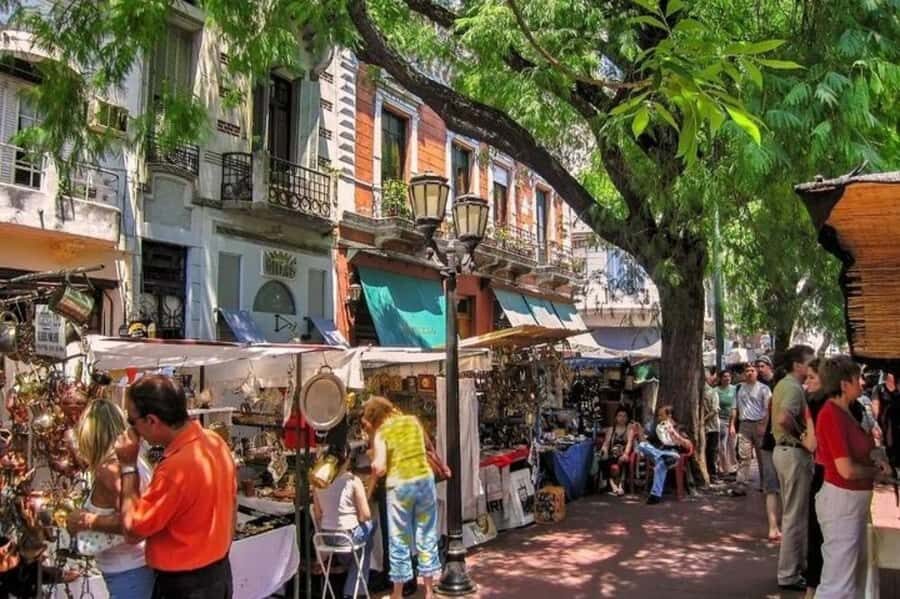
A key stop here is the San Telmo Market, inaugurated in 1897. Even if you don’t buy anything, it’s worth it because the market is a snapshot of how old and new habits coexist. Antiques and little eateries sit next to fruit and vegetable stalls. It’s also a smart place to plan your next move.
Plaza Dorrego is another highlight in this area. You’ll also catch the French Passage as a photo backdrop, and you’re near Ezeiza’s house (also flagged in the tour). If you’re hungry, this zone is one of the easiest places to grab a meal on your own, because the square and passage areas give you plenty of options nearby.
La Boca: Caminito, Tango Roots, and Boca Juniors Culture
When the tour heads to La Boca, you can feel the energy change. This is where Buenos Aires leans loud and proud. The neighborhood is tied to tango’s origins, and the streets reflect that cultural pride.
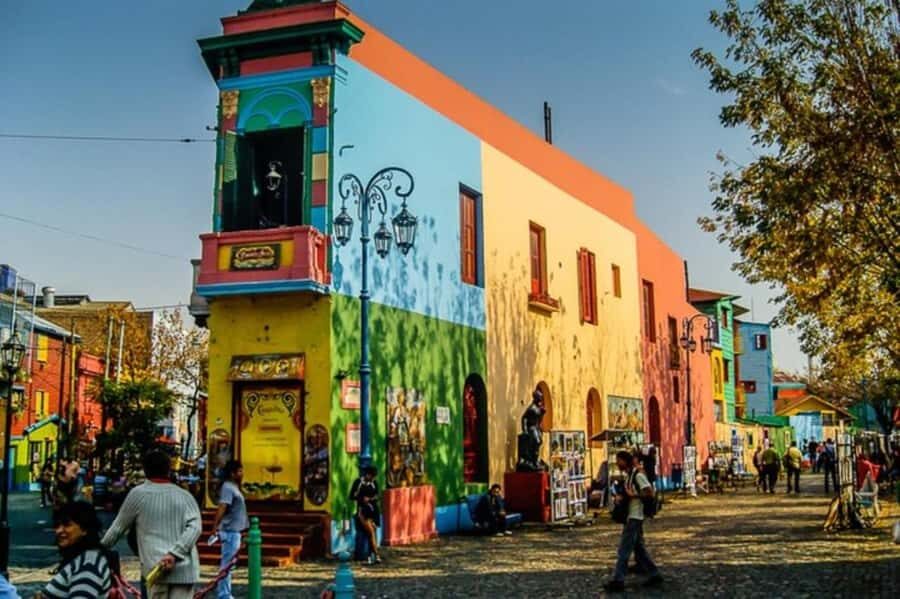
The big draw is Caminito, described as an open-air street that functions like an open-air museum full of color. This is one of those places where your first reaction might be, it’s touristy. Then the guide reframes it: yes, it sells souvenirs, but it also preserves a visual language of the neighborhood. You’ll see the kind of street art, painted facades, and performer energy that help tango feel like more than a song.
The other anchor is sports. You’ll explore Boca Juniors Stadium and learn about the famous football club tied to the neighborhood. For many visitors, that’s the moment they suddenly understand why La Boca matters culturally beyond aesthetics. Football is a social glue here, and the stadium gives you context for the neighborhood’s intensity.
A useful expectation-setting note: you might spot tango dancers in traditional restaurants. The tour description frames it as a chance, not a guaranteed ticket event. Either way, walk slowly through Caminito. The best photos come when you stop paying attention to the crowds and start watching the details: the paintwork, the performers, and the street-level rhythm.
Other La Boca tours we've reviewed in Buenos Aires

Costanera Sur Ecological Reserve: a Break Near the Center
One of the smarter pieces of this tour is that it makes space for nature without sending you out of the city. The Costanera Sur Ecological Reserve is listed as part of the experience, and it works as a reset between dense neighborhoods.
Think of it like this: Montserrat gives you architecture and politics, San Telmo gives you layered legends and markets, La Boca gives you identity and performance. Then Costanera Sur offers a different kind of Buenos Aires story: animals, plants, and a calmer pace close to the urban core.
If you’re the type who gets tired of constant streets, you’ll appreciate this breathing space. Even if the reserve isn’t your main reason for coming, it’s a nice way to keep the day from feeling like pure sightseeing sprinting.
Puerto Madero and Puente de la Mujer by Santiago Calatrava
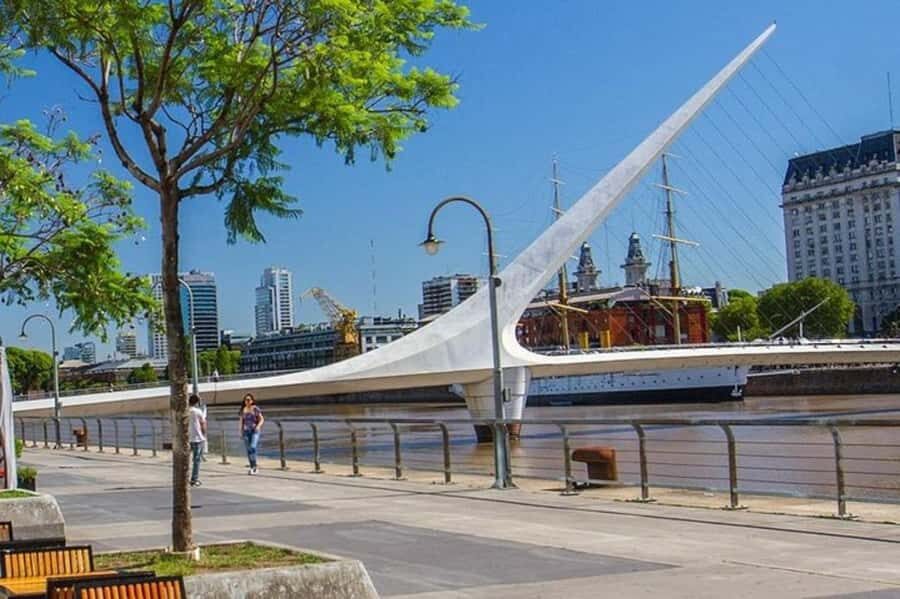
Now for the finale. Puerto Madero feels like Buenos Aires switching gears. It used to be tied to an abandoned port project, and today it’s a modern district with towering buildings that remake the skyline. The riverfront promenade area is also where you’ll find bars and restaurants if you want to keep going after the tour.
The signature moment is Puente de la Mujer, designed by renowned architect Santiago Calatrava. This bridge is not subtle. It’s sculptural and recognizable from a distance, and it’s the perfect ending because it visually closes the day: from old city cores to a forward-looking urban waterfront.
You’ll also get a look at historical port-linked treasures around this area, including the frigate Sarmiento and the corvette Uruguay. The tour doesn’t present them like distant museum pieces. It places them in the context of the port story that Puerto Madero’s transformation depends on.
Practical photo advice: plan for lighting. Bridges can look amazing in daylight, but the reflective river tones can also make photos tricky. Stand still for a minute and check your angle before you start shooting.
How good value feels at $100 for 4 hours
At $100 per person for about 4 hours, this tour is priced like a high-coverage walking experience. The value isn’t just that you visit several neighborhoods. It’s that you get a guide threading them together so the city doesn’t feel like separate postcards.
Here’s what you’re buying:
- Guided context across major districts: Montserrat to San Telmo to La Boca to Puerto Madero
- Signature landmarks you’d otherwise piece together on your own (Plaza de Mayo, Avenida de Mayo, Boca Juniors Stadium, Puente de la Mujer)
- Multiple built-in stops that save time figuring out where to go and what to look for
What’s not included is just as important. Meals and drinks aren’t included, so you’ll want to treat this as a daytime route and plan lunch or snacks separately. The San Telmo Plaza Dorrego area is naturally convenient for that because the tour positions it as a good spot to enjoy a meal nearby.
Also note: Café Tortoni depends on availability. That’s not a dealbreaker, but it affects the “perfect itinerary” feel. Still, the big benefit is the overall structure: you’re not walking one long stretch with nothing but signage. You get frequent points of meaning.
Who should book this Buenos Aires route (and who might not)
This tour fits best if you want a quick, well-guided orientation to Buenos Aires that covers both sides of the city’s personality: the government and old streets, and the football and waterfront modernity.
You’ll likely enjoy it if:
- You like walking tours that explain what you’re seeing, not just where to stand
- You want a balanced mix of classic sites and street-level color
- You care about both architecture and culture beats like tango and Boca Juniors
You might think twice if:
- You dislike walking for hours (this one is designed for comfortable shoes)
- You need wheelchair access (it’s listed as not suitable for wheelchair users)
- You want a fully planned sit-down food experience (meals are not included)
Should you book this Buenos Aires tour?
Yes, I think it’s a good choice if you want your first Buenos Aires day to feel structured and meaningful. You get a clean path from Montserrat’s Plaza de Mayo through the legends and markets of San Telmo, the culture-forward streets of La Boca, and a satisfying modern finish at Puente de la Mujer in Puerto Madero. It’s the kind of route that helps you understand the city’s contrasts fast.
If you book, do yourself a favor: wear comfortable shoes, check the weather, and plan to snack on your own during the neighborhood transitions. Also keep an eye out for whether Café Tortoni is available on your day, but don’t let that be the deciding factor. The real payoff is how the guide connects the neighborhoods into one Buenos Aires story.
FAQ
How long is the Buenos Aires tour?
It lasts 4 hours.
What neighborhoods and areas does the tour cover?
You’ll visit Montserrat, San Telmo, La Boca, and Puerto Madero, finishing at Puente de la Mujer.
Where does the tour start?
It starts at Catedral Metropolitana de Buenos Aires.
What languages are the live guides available in?
Live tour guides are available in English, Spanish, and Portuguese.
Is Café Tortoni included?
Café Tortoni is included as a stop, but it depends on availability.
Are meals or drinks included?
No. Meals and drinks are not included.
Is the tour wheelchair accessible?
No. It’s not suitable for wheelchair users.