REVIEW · BUENOS AIRES
Buenos Aires: Empanadas and Alfajores Guided Cooking Class
Book on GetYourGuide →Operated by BsAs Mio Turismo · Bookable on GetYourGuide
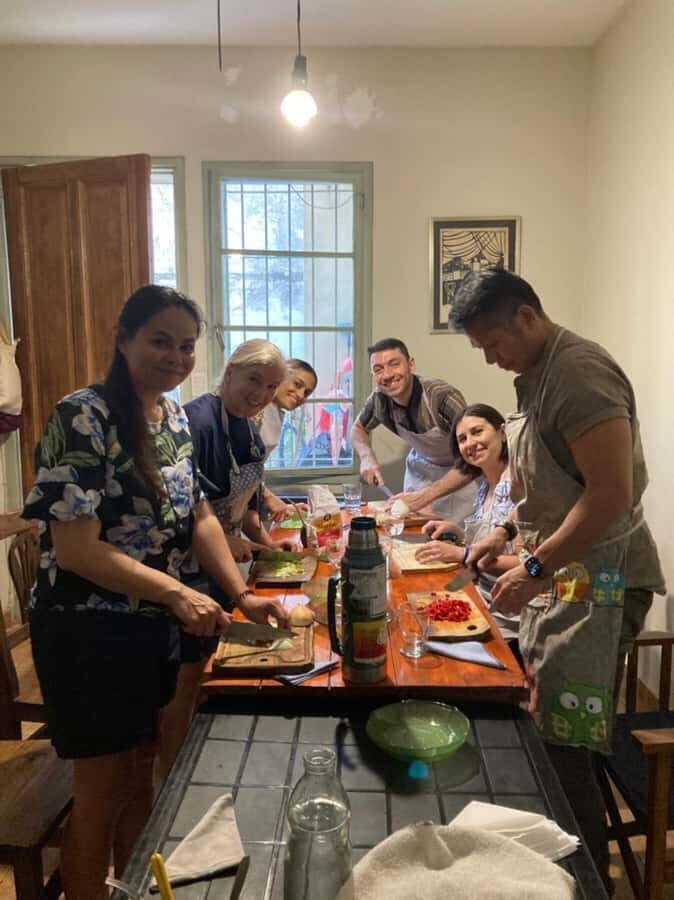
This class is about more than food. It takes place in a real Argentinian home in San Telmo, where you learn to make empanadas and alfajores from scratch, with the mate ritual built into the evening.
I really like the hands-on pace. You get step-by-step guidance, you shape the fillings and dough, and you leave with a skill you can actually repeat at home. I also like the social side: conversation flows while you cook, so the meal feels shared, not classroom-like.
One possible drawback is that some sessions may run with only one main empanada filling type. Also, while recipes are shared after class, getting them can take a little follow-up, so it helps to ask when you finish.
In This Review
- Key Points You Should Know Before You Go
- San Telmo Meeting Point: Where This Cooking Class Actually Starts
- In the Home Kitchen: How the Night Gets Pleasant Fast
- Mate Ritual 101: The Herbal Tea Part You’ll Remember
- Empanadas From Scratch: Dough, Fillings, and the Repulgue Seal
- The filling mix: what you’ll likely make
- The repulgue: the key skill that actually matters
- Alfajores Workshop: Cornstarch Cookies + Dulce de Leche
- What You’ll Eat and How the 3 Hours Really Feel
- Language, Teaching Style, and Getting Your Questions Answered
- Price and Value: Does $37 Go Far in Buenos Aires?
- Who This Cooking Class Is Perfect For (and Who Might Want Something Else)
- The One Thing to Do for a Better Outcome: Ask About Recipes
- Provider Notes: BsAs Mio Turismo and the Home-Host Style
- Should You Book This Empanadas and Alfajores Class?
- FAQ
- How long is the Buenos Aires empanadas and alfajores cooking class?
- Where is the meeting point in San Telmo?
- How many people are in the group?
- What will I cook during the class?
- Is mate included?
- What language is the instruction offered in?
- Is wine included?
- Are vegetarian filling options available?
Key Points You Should Know Before You Go
- Small group (max 8) makes it feel like family cooking, not a production line
- Mate included as part of the experience, not just a drink on the side
- Empanada technique focus including the classic sealed edge, the repulgue
- Alfajores using cornstarch cookies and dulce de leche filling
- You eat what you make during the session, so you leave satisfied
- Meat and vegetarian filling options are available
San Telmo Meeting Point: Where This Cooking Class Actually Starts
You’ll meet at Paseo Colon 1355 in San Telmo. Ring the bell at the scheduled time, and expect to be guided in from there.
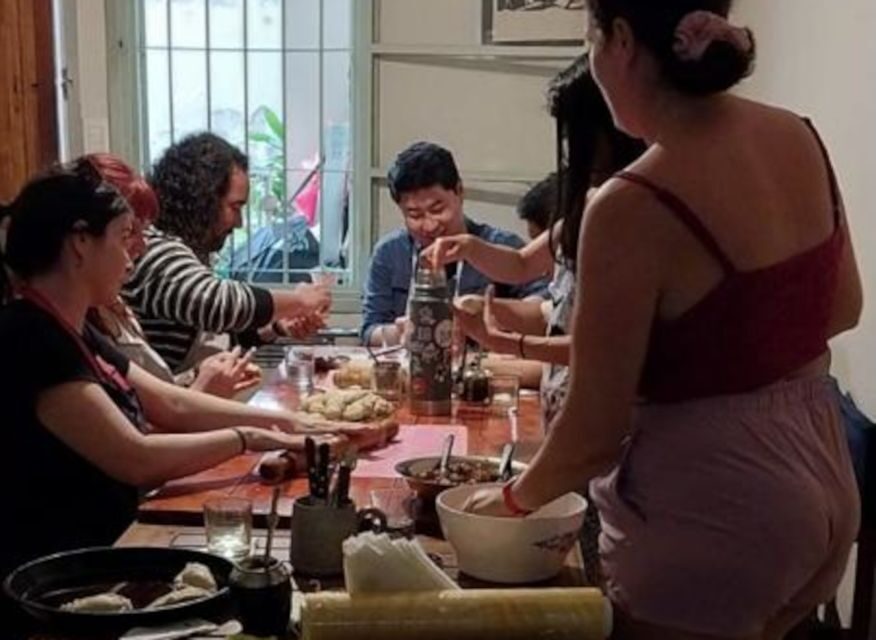
This is one of those Buenos Aires experiences that works because it isn’t staged like a show. A home setting changes the whole vibe: fewer rules, more casual teamwork, and more chances to ask questions while you’re doing the work.
If you’re the type who hates waiting around, you’ll be happy. The evening is structured around prep and hands-on making, with mate and conversation woven in rather than tacked on at the end.
Other Buenos Aires tours we've reviewed in Buenos Aires


In the Home Kitchen: How the Night Gets Pleasant Fast
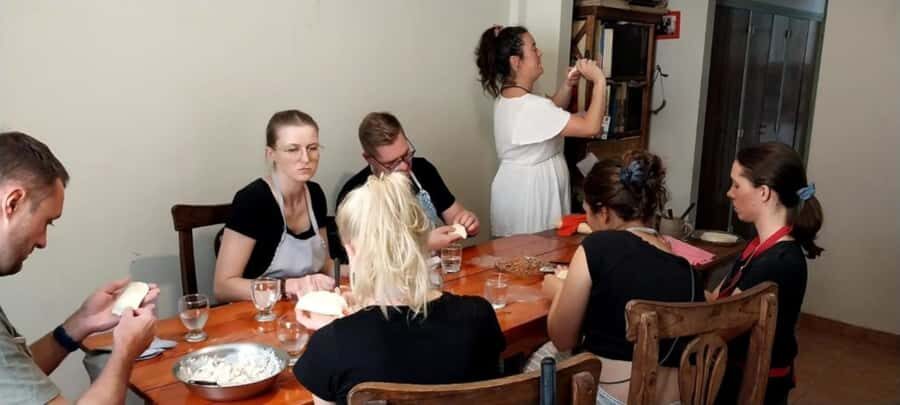
Once you’re inside, the focus shifts quickly from talking to making. The hosts set expectations for the steps ahead, and you’ll be handling real ingredients and tools during the class.
Several parts of the experience depend on the group size. With a small group, you can see what’s happening at your work station and you can get help before a mistake turns into a mess. That matters most when you’re sealing empanadas, where the edge work takes a little practice.
A small tip for your comfort: if the table is set up in a way where you feel far from the main action, don’t be shy about adjusting your seat. In similar small-group formats, being toward the end can make it harder to see fine details before you try them yourself.
Mate Ritual 101: The Herbal Tea Part You’ll Remember
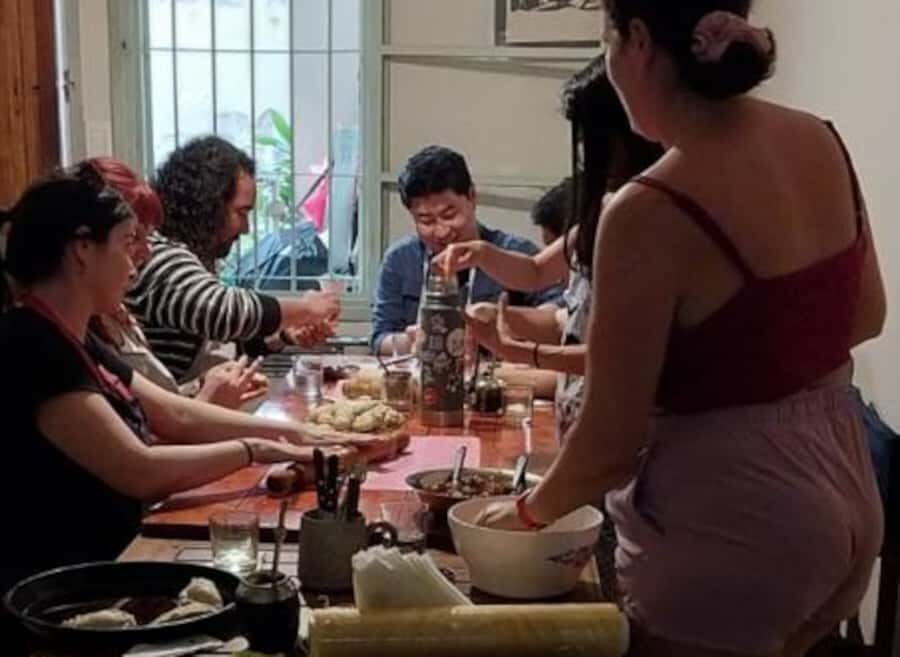
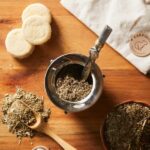
Before you tackle dough, you’ll learn about mate, Argentina’s traditional herbal tea. The class includes the traditional method of creating mate, and you’ll get to experience how it’s served as part of the shared table culture.
Mate isn’t just a flavor moment. It’s a social rhythm: the cup passes, the conversation keeps moving, and it helps the group loosen up. That’s why it fits so well with a cooking class—warm tea while you’re working makes the whole process feel steadier and more relaxed.
If you like drinks with a story, this part delivers. You learn the basic approach to making mate the traditional way, and you’re not just sipping while everyone else cooks. You’re part of the same flow.
Empanadas From Scratch: Dough, Fillings, and the Repulgue Seal
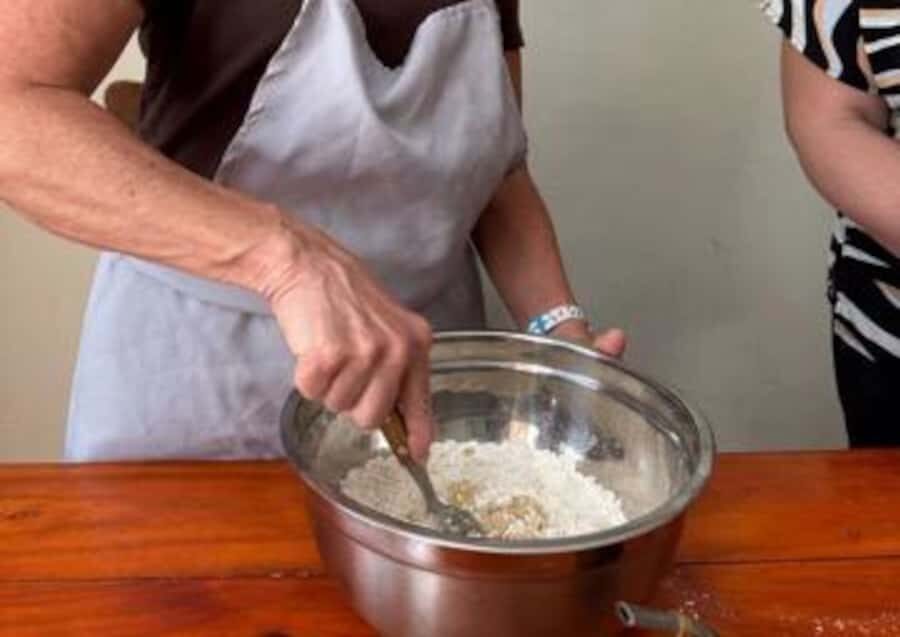
Now the main event: empanadas. You’ll learn how to craft Argentine empanadas, including the dough steps and how to build the fillings you’ll use.
Empanadas in Argentina are a flexible comfort food—stuffed dough that can be baked or fried depending on the style. In class, you’ll focus on the fundamentals that let you do this yourself later: dough consistency, filling distribution, and the sealing method.
The filling mix: what you’ll likely make
You’ll make empanadas with savory fillings. The information you’re given points to meat-based options as well as a vegetarian alternative. Some past participants would have liked extra variety across multiple fillings, so just know you may not get a full sampler of every possible style in one sitting.
That said, you still learn the core technique. Once you master the dough handling and closure, swapping fillings at home becomes easy instead of guesswork.
Other Buenos Aires cooking classes we've reviewed in Buenos Aires
The repulgue: the key skill that actually matters
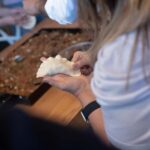
The most useful part to practice is the repulgue, the classic twisted edge that seals the empanadas. Your instructor shows it step-by-step, and then you get to repeat the motion on your own.
This is where small-group teaching pays off. When you’re sealing, you’re checking three things at once: the dough thickness, the filling amount, and whether the edge will hold together. If you get help early, you save yourself the frustration of redoing empanadas later.
Alfajores Workshop: Cornstarch Cookies + Dulce de Leche
After empanadas, you shift gears to dessert: alfajores. These are beloved Argentine pastries, usually made with cookies that have a characteristic melt-in-your-mouth texture and filled with dulce de leche.
The class focus is specific and helpful: alfajores made with cornstarch, plus the essential creamy dulce de leche filling. That’s the combination you want if you’re aiming to reproduce the flavor at home, not just copy a cookie shape.
What I like about learning alfajores in a cooking class (instead of buying them) is that you understand what makes them work. You learn how the dough behaves, when it feels ready, and how the filling changes the whole bite once assembled.
When dessert lands on your plate, you’ll understand why people get emotional about this treat.
What You’ll Eat and How the 3 Hours Really Feel
This experience includes a meal, and the format is designed so you eat the results of your work rather than only watching cooking happen. Expect to eat what you make, including your empanadas and your alfajores.
Pacing-wise, you’ll spend time doing the dough and filling prep, then you’ll shape and seal, and finally you’ll enjoy the finished food. The mate experience is folded into the flow, so it doesn’t feel like a separate stop.
Also, there’s usually plenty of food. Many participants mention leaving full, and that checks out with a class where you’re actively producing two items. If you’re used to tours where you get a snack and call it dinner, this one is different.
Language, Teaching Style, and Getting Your Questions Answered
Instruction is available in Portuguese and English, and the teaching style is practical. Hosts keep things moving while still explaining what you’re doing and why it matters.
Some participants highlight how the instructor combines professional clarity with a fun, relaxed personality. If you’re nervous about cooking, that’s a good sign—this class isn’t built for experts only.
One small warning from real-life experience patterns: if your group is seated in a way where you can’t see the sealing motion clearly, focus on getting a close look before you start your first empanada. You’ll learn faster when you see the motion once, then copy it right away.
Price and Value: Does $37 Go Far in Buenos Aires?
At $37 per person for a 3-hour, small-group class, the value is strong if you want real technique and a real meal.
Here’s why. You’re not paying just for ingredients or for a single dish. You’re paying for:
- Small-group instruction (max 8)
- Cooking class + ingredients
- Mate + water
- A meal that includes what you produce
Wine is not included, but it’s available for purchase. That means you can keep costs predictable, and you can decide whether to add alcohol.
For Buenos Aires, this price makes sense because it’s a focused night: no big transfers, no wasted hours. You’re in a home setting, cooking, eating, and learning in one go.
Who This Cooking Class Is Perfect For (and Who Might Want Something Else)
I’d recommend this class if you want an authentic Buenos Aires food experience without a guessing game. It’s especially good for:
- People who like hands-on learning
- Couples, friends, or solo travelers who enjoy meeting others in a warm setting
- Anyone who wants a Buenos Aires skill beyond ordering food off a menu
- Families with teens who can follow steps and share the work
It may be less ideal if you expect a long list of different fillings or a strict restaurant-style output. A single session has limited time, and some participants noted they’d prefer extra filling variety.
The One Thing to Do for a Better Outcome: Ask About Recipes
You may receive recipes after the class, and many people report getting them. Still, a few participants noted the recipes weren’t straightforward to obtain and they had to follow up, sometimes using social media channels.
So here’s your practical move: when you finish cooking and you’re still in the host’s presence, ask how you’ll get your recipes and when. That’s it. One clear question can save you time later.
Provider Notes: BsAs Mio Turismo and the Home-Host Style
The experience is offered by BsAs Mio Turismo. What you can expect from this style of workshop is a home-hosting atmosphere where the guide’s personality matters.
In past sessions, hosts like Thomas, Sophia, Maria, and Sophie have led parts of the class, with family members supporting the table flow. One participant even mentioned Stella keeping drinks coming, which fits the feeling that this is a lived-in, shared evening, not a scripted tour.
Should You Book This Empanadas and Alfajores Class?
I think you should book it if you want a true Buenos Aires night that mixes cooking skills, mate culture, and a dinner that comes from your own hands. The small group size and the inclusion of meal + ingredients make it a good value for $37, and the repulgue and cornstarch alfajores techniques are the kind of lessons you can actually take home.
Skip it only if you want maximum variety across many fillings, or if you’re the type who needs printed recipes instantly with no follow-up. If you fall into the latter category, just ask about recipes before you leave and you’ll be fine.
FAQ
How long is the Buenos Aires empanadas and alfajores cooking class?
It runs for 3 hours.
Where is the meeting point in San Telmo?
You meet at Paseo Colon 1355 in San Telmo. Ring the bell at the starting time of the class.
How many people are in the group?
The class is a small group limited to 8 participants.
What will I cook during the class?
You’ll learn to make Argentine empanadas and alfajores filled with dulce de leche.
Is mate included?
Yes. Mate is included, along with water.
What language is the instruction offered in?
Instruction is available in Portuguese and English.
Is wine included?
No. Wine is available for purchase, but it isn’t included.
Are vegetarian filling options available?
Yes. Vegetarian alternatives for the fillings are available.